

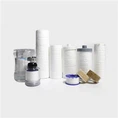
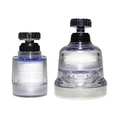
Maintenance of kitchen tap filters mainly includes the following aspects:
1. Regular cleaning
Filter cleaning
Frequency: If the local water quality is poor and there are more impurities such as mud, rust, etc. in the water, it is recommended to clean the filter once a week; if the water quality is good, it can be cleaned once every 2-3 weeks.
Method: First, turn off the faucet and remove the filter from the faucet. Then, carefully open the filter housing and take out the filter. Rinse the filter with running water to wash away the impurities attached to it. For some more stubborn impurities, you can use a soft brush to gently scrub it, but be careful not to damage the filter. After cleaning, dry the filter and reinstall it back into the filter housing.
Activated carbon cleaning or replacement (if any)
Activated carbon generally cannot be reused after cleaning. Because after activated carbon adsorbs impurities, its adsorption capacity will gradually decrease.
After the activated carbon filter element has been used for a period of time (usually about 2-3 months as recommended in the product manual), its adsorption effect needs to be checked. If you find that the taste of the water has not been significantly improved, or the chlorine smell in the water is still strong, you need to replace the activated carbon filter. When replacing, follow the product manual of the filter, open the corresponding parts, remove the old activated carbon filter, put in the new filter, and ensure that it is installed correctly.
2. Check the integrity of the parts
Housing inspection: Regularly check whether the housing of the filter is cracked or damaged. Because once the housing has cracks, it may cause water leakage, and it will also cause unfiltered water to mix directly into the filtered water, affecting the filtration quality. If the housing is damaged, the filter should be replaced in time or the manufacturer should be contacted for repair.
Interface inspection: Check whether the interface between the filter and the faucet is firm. Before each use, you can gently turn the filter to see if there are any signs of looseness. If the interface is loose, water leakage may occur, and you need to retighten the interface or replace the sealing gasket. The sealing gasket is a key component to ensure the sealing of the interface. Generally, it can be checked every 3-6 months for aging or damage. If there is a problem, it should be replaced in time.
3. Pay attention to the filtering effect
Observe the water flow rate: Under normal circumstances, the water flow rate after passing through the filter should be relatively stable. If you find that the water flow rate has slowed down significantly, it is likely that the filter is clogged or impurities have accumulated in the internal pipes. At this time, you need to clean or check the internal parts of the filter in time.
Detect water quality changes: You can use simple water quality testing tools, such as water quality test strips, to test the filtered water quality regularly. The main test items include pH value, residual chlorine content, hardness, etc. If you find that the water quality indicators do not meet expectations, such as excessive residual chlorine content or no improvement in hardness, you need to further check whether the filter element is invalid or whether other types of filter elements need to be replaced.
If you are interested in learning more about the maintenance methods of kitchen tap filters, welcome to visit www.angefilter.com!