

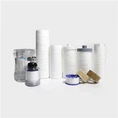
PP Melt Blown Filter
What is PP Melt Blown Filter
PP melt blown filter cartridges are critical components in a wide range of applications, from water purification to chemical filtration. These cartridges are designed with unique melt-blown technology, providing exceptional particle retention, high dirt-holding capacity, and low-pressure drop. These filters are often used in sediment applications, but they do not transfer any sedimentary taste or odor to filtered liquids.
Benefits of PP Melt Blown Filter
High filtration efficiency
PP melt blown filter are known for their excellent filtration efficiency. The unique manufacturing process involves melting and extruding polypropylene fibers, which are then blown onto a filter matrix to form a dense and uniform structure. This structure effectively captures and retains particles, contaminants, and impurities, ensuring clean and pure filtrate.
Wide range of micron ratings
One of the key advantages of PP melt blown filter is their ability to offer a wide range of micron ratings. Micron rating refers to the size of particles that the filter can effectively capture. PP melt blown filters are available in various micron ratings, ranging from 1 to 100 microns, allowing for precise filtration based on specific application requirements.
Chemical compatibility
PP is known for its excellent chemical compatibility, making PP melt blown filter suitable for a wide range of applications. These filters can withstand exposure to various chemicals, acids, and bases without compromising their structural integrity or filtration efficiency. This chemical resistance ensures long-lasting performance and reliability in demanding filtration processes.
High dirt holding capacity
Another significant advantage of PP melt blown filter is their high dirt holding capacity. The dense and uniform structure of these filters allows for effective particle retention, preventing clogging and extending the filter's lifespan. This advantage is particularly beneficial in applications where there is a high concentration of contaminants or when filtration needs to be carried out over an extended period.






Why Choose Us
Rich experience
We have more than 20 years of experience in mechanical design and filter element production. We sincerely invite and welcome you to our company to discuss cooperation.
Excellent quality
Our products enjoy a good reputation. We have a strict production system and excellent product quality. It is a wise choice to choose us.
Advanced equipment
With 20 sets of PP melt-blown filter element production lines and 10 sets of activated carbon production lines, we mainly produce filter element manufacturing machines and various filter element products.
Production market
Our products have been exported to Asia, Europe, North America and Africa and more than 20 countries in the world, our customer give the good reputation for our products and service.

A PP melt blown filter operates through a two-step process: melt blowing and formation of the cartridge. The process begins by melting down Polypropylene (PP) plastic into a liquid form. This molten PP is then blown by hot, high-velocity air or gas to form an excellent fibrous structure, a method known as ‘melt blowing.’ During this phase, tiny fibers are created, diminishing in diameter as they cool and solidify. This leads to the creation of a dense web-like structure with a graded pore size, which is ideal for filtration.
Subsequently, the web-like structure is wound tightly around a core, forming the cartridge. The winding process ensures varied density, with the outer layers having larger pores to trap larger particulates and the inner layers having smaller pores for finer filtration. This unique structure allows the PP Melt Blown Filter Cartridges to capture and hold a high volume of impurities, thus delivering superior filtration performance.
What Are The Differences Between PP Melt Blown Filters and String Wound Filters?
PP melt blown filters have a higher filtration efficiency than string wound filters in general, particularly when it comes to capturing smaller particles. Because fine fibers in melt blown filters produce a denser matrix with more surface area for particles to adhere to, the capture rate is higher. PP melt blown filters are highly efficient at removing fine particles from fluids because they can capture particles as small as 0.3 microns in diameter. String wound filters, on the other hand, are better adapted for removing larger particles and sediment and are less effective at capturing tiny particles.
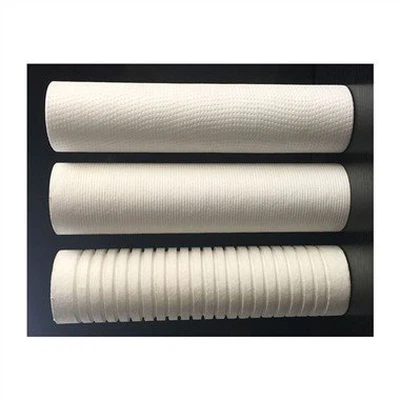
PP melt blown sediment filter: This type of filter has dense polypropylene microfibers, which results in high particle retention. Its graded pores ensure deep filtration, capturing contaminants of varying sizes.
Slotted PP sediment filter: This variant has grooves on the core surface, which increases filtration efficiency. The slotted design enhances the sediment filtration process and is particularly effective in trapping impurities.

Specifications of PP Melt Blown Filter
PP melt-blown filters are available in lengths from 10 to 40 inches.
| Graded Density | Outer Layer | Middle Layer | Inner Layer |
| 0.5 Micron Layer | 5 Micron | 3 Micron | 0.5 Micron |
| 1 Micron Layer | 20 Micron | 5 Micron | 1 Micron |
| 5 Micron Layer | 30 Micron | 10 Micron | 5 Micron |
| 10 Micron Layer | 30 Micron | 20 Micron | 10 Micron |
| 20 Micron Layer | 50 Micron | 30 Micron | 20 Micron |
What to Consider When Choosing PP Melt Blown Filter
Identifying industrial process requirements
When it comes to choosing the right PP melt-blown filter, it's crucial to identify the specific requirements of your operation. Understanding your industrial process is essential in determining the optimal filtration solution. Consider factors such as the flow rate of the liquid or gas being filtered, the operating temperature range, and the types of contaminants present.
Cartridge size and configuration
Selecting the appropriate size and configuration of PP melt-blown filters is a crucial aspect of optimizing your filtration system. Cartridge size determines the filtration capacity and duration, as well as the compatibility with your equipment. Consider factors such as the available space in your filter housing and the desired flow rate to determine the appropriate length and diameter of the cartridge.
Micron ratings and filtration efficiency
Micron ratings play a vital role in selecting the right PP melt-blown filter for your industrial filtration needs. The micron rating indicates the size of particles that the filter can effectively capture and retain. It is essential to consider the desired level of filtration efficiency and the specific contaminants you need to remove from your process. Lower micron ratings correspond to finer filtration and can effectively capture smaller particles.
Fluid compatibility
Ensuring fluid compatibility is a vital consideration when selecting PP melt-blown filter for industrial processes. It is important to assess the chemical compatibility of the filter materials with the fluids being filtered to avoid any adverse reactions. Different fluids may require specific cartridge materials or coatings to withstand their chemical properties.
Application of PP Melt Blown Filter
Water treatment: PP melt blown filters are used extensively in municipal and industrial water treatment plants to remove sediments, rust, and other particulates, ensuring a clean and safe water supply.
Food and beverage industry: In the food and beverage sector, PP melt blown filters are essential for filtering out impurities during the production process, helping to maintain high hygiene and safety standards.
Pharmaceuticals and biotechnology: PP melt blown filters are crucial in ensuring the purity of water and other solvents used in the production of pharmaceuticals and biotechnological products, thereby preventing contamination and ensuring product quality.
Chemical processing: PP melt blown filters are employed to filter aggressive chemicals and solvents, protecting equipment and ensuring the quality of the end products in chemical processing industries.
Oil and gas: In the oil and gas sector, PP melt blown filters are used in refining processes to remove contaminants from crude oil and other hydrocarbons, ensuring smooth operation and high-quality outputs.
How to Identification of the Quality of PP Melt Blown Filter?
look at the weight
We can measure the weight with our hands. The heavier the weight, the higher the fiber density of the filter element. The quality is also better.
look at compressibility
Generally, the higher the fiber density of the filter element. The better the compression performance, the better the quality of the PP filter element. We can judge by hand, the stronger the hand, the better the compression performance.
look at the material
When choosing a filter element, you must be optimistic about the material of the filter element. The color of the regular filter element filter paper is uniform and the paper surface is flat. The inferior filter paper is not uniform in color and poor in texture.
Look at the colloid
The regular filter element has good gel quality and good elasticity, while the inferior filter element has soft rubber and poor texture.
Polypropylene Microfibers
These ultra-fine fibers, formed through the melt-blown process, are the primary material in these filter cartridges. Their small diameters ranging from 0.5-10 micrometers, allow for excellent particle retention.
Filter Media
The densely packed polypropylene microfibers create a high-porosity filter media, which offers superior filtration capabilities while maintaining a low-pressure drop.
Core
The core provides structural support to the filter cartridge, ensuring its integrity even under high-pressure operations. It is typically made of polypropylene to maintain overall compatibility and safety.
End Caps
These are securely attached to each end of the filter cartridge and assist in sealing the cartridge within the filter housing, preventing any bypass of unfiltered fluid.
Gaskets/O-Rings
These components ensure a secure seal within the filter housing to prevent leakage or bypass of unfiltered fluid.
Process of PP Melt Blown Filter
Material preparation: The first step involves the preparation of the polypropylene (PP) material. This consists of the proper cleaning, drying, and de-dusting of the raw material.
Melt blowing: The prepared PP material is then melted at a high temperature, forming a molten polymer solution.
Fiber extrusion: The molten polymer is extruded through small nozzles, creating thin streams of polymer. High-speed hot air is blown at the streams, stretching them into wonderful fibers.
Web formation: The fine fibers are collected on a rotating drum or a conveyor to form a self-bonding web. The thickness of the web can be adjusted depending on the desired filtration efficiency.
Cooling and solidification: The web is cooled, allowing the fibers to solidify and bond together.
Roll winding and cutting: The resultant non-woven filter media is then wound onto rolls and cut into the desired lengths to create the final PP melt-blown filters.
The Steps for Replacing the PP Melt Blown Filter
1.Upon receiving the instruction to replace the filter core, confirm that the system has stopped running.
2.Prepare the appropriate PP melt blown filter core (specifications, materials, dimensions, sealing gaskets, model, etc.) and disassembly tools.
3.Thoroughly clean the filter housing, clear the surrounding area of the filter, keep it in the operating area, and wear protective equipment.
4.Disconnect the filter that needs to replace the PP melt blown filter core from the system. Slowly open the top vent of the filter to release pressure, paying attention to safety during the process to prevent material or liquid splashing.
5.Empty the material in the filter, use tools to open the filter cover, remove the large fatty melt-blown filter core, and place it in a plastic bag for cleaning or disposal.
6.Use clean tools and cloths to clean the inside of the filter, and prepare to install the clean PP filter core.
7.Open the plastic bag at one end of the filter to check if the sealing gasket is intact and in place.
8.Install the filter core with the material flowing in from the outside of the filter core and flowing out from the inside of the filter core.
9.Use a suitable wetting agent (such as water) to moisten the sealing gasket and the socket of the filter housing, bring one end of the filter core close to the sealing gasket, insert the filter core socket vertically into the socket of the filter housing, remove the filter core packaging bag after inserting the PP filter core, and then install the filter cover and tighten it with tools.
10.Close the filter drain valve, open the top vent of the housing, slightly open the inlet valve to allow material to enter the housing until liquid overflows from the top vent of the housing. Then close the vent valve and carefully check for leaks at the disassembly site.
11.Slowly open the outlet valve of the filter until fully open. Remove the tools used for replacement and cleaning. Clean the surrounding area.
FAQ