

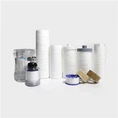
PP String Wound Filter
What is PP String Wound Filter
PP string wound filter is a type of depth cartridge filter that is made by weaving yarn around a core. Microfibers are twisted and twined together to form a yarn. This yarn is woven in a honeycomb-shaped weave around the core such that it forms a gradient structure to allow better filtration. The quality of a wound filter cartridge hugely depends on the type of yarn that is used to make the filter. The material of the core and a controlled manufacturing mechanism that produces a precise micron rating also contribute.
Benefits of PP String Wound Filter
High filtration efficiency
PP string wound filters offer exceptional filtration capabilities, ensuring that unwanted impurities are removed with ease. The tight winding process results in a compact filter, providing a higher filtration density than other filters.
Long-term durability
Because PP string wound filters have a densely packed filter media, they offer a greater surface area than other filters, resulting in longer filter life and less frequent replacement.
Versatility
PP string wound filters are incredibly versatile and can handle a wide range of flow rates, temperatures, and pressures. They also work in a variety of environments, from food-grade applications to chemical processing and petroleum refining.
Cost-efficient solution
PP string wound filters are a budget-friendly solution in the realm of industrial filtration. Due to their ability to last longer than some other filter types, and their lower upfront cost, companies can save money on filtration overall.


Why Choose Us
Rich experience
We have more than 20 years of experience in mechanical design and filter element production. We sincerely invite and welcome you to our company to discuss cooperation.
Excellent quality
Our products enjoy a good reputation. We have a strict production system and excellent product quality. It is a wise choice to choose us.
Advanced equipment
With 20 sets of PP melt-blown filter element production lines and 10 sets of activated carbon production lines, we mainly produce filter element manufacturing machines and various filter element products.
Production market
Our products have been exported to Asia, Europe, North America and Africa and more than 20 countries in the world, our customer give the good reputation for our products and service.

Both pleated filters and PP string wound filters are sediment filters. The purpose of a sediment filter is to remove suspended particles or colloidal substances from the water source. If these contaminants are not removed, they can cause damage to other delicate filtration membranes in dialysis water or even block the water circuit. Note that when choosing a pleated filter or PP string wound filter, make sure there is a sediment contamination problem in your water.
Designed with a thin dense honeycomb structure of being dense inside and sparse outside, the rope filter has strong dirt holding capacity. They are more effective when a wide range of particle sizes is required. Compared to pleated filters, PP string wound filters have the advantage of depth, although they do not have a larger surface area.
What Are The Materials of PP String Wound Filter
The main materials used in PP string wound filters are polypropylene yarn and a central core made of either polypropylene or stainless steel. Polypropylene yarn is a durable and cost-effective material that is resistant to many chemicals and can handle high temperatures. The central core provides stability and reinforcement to the filter. The materials used in PP string wound filters are reliable and effective in removing impurities from water. They are also environmentally friendly as they can be easily recycled. PP string wound filters are a dependable option for improving the quality of water in various settings.
What Is a Micron Rating in a PP String Wound Filter?
50 Micron: Filters with this rating are often used in residential and commercial water filtration systems. They can effectively remove sand, silt, and larger suspended particles.
25 Micron: Suitable for fine sediment removal, these filters are standard in industrial processes and commercial water treatment.
10 Micron: Ideal for pre-filtering in reverse osmosis systems, they can remove fine particles that may clog a reverse osmosis membrane.
5 Micron: Used in applications that require a high level of purity, such as pharmaceutical and beverage industries. These filters remove smaller suspended particles and large bacteria.
1 Micron: These filters provide excellent filtration and are typically used in critical applications like sterilizing and final filtration in pharmaceutical and biotech processes.
What to Consider When Choosing PP String Wound Filter
PP string wound filter come in various materials, each with distinct advantages. Polypropylene cartridges are popular for their compatibility with a wide range of fluids and resistance to chemicals. Meanwhile, string wound cartridges with cotton or other natural fibers offer superior sediment filtration. Understanding the properties of materials helps in selecting the most suitable string wound filter for the intended application.
Micron rating determines the size of particles a PP string wound filter can effectively filter. Lower micron ratings indicate finer filtration capabilities, capturing smaller particles. However, finer filtration may reduce flow rates. Balancing micron ratings with flow requirements is crucial for efficient filtration without compromising performance.
Ensure compatibility between the PP string wound filter and the filtration system. Check the cartridge dimensions and ensure they fit snugly into the housing without leaks or bypass. Additionally, consider the PP string wound filters lifespan concerning your usage frequency and replaceability, aiming for cost-effective, long-term solutions.
Certain applications demand specialized cartridges. For instance, high-temperature or corrosive environments may require cartridges with specific materials or designs. Understanding these unique needs is essential for selecting cartridges that can withstand such conditions.
How to Identify the Quality of PP String Wound Filter?
Smell
To identify the raw material, It smells pungent for not 100% pure PP material. It is easy to be broken for not 100% pure PP material string wound filter.
Pinch
To fell the structure tight or not, if it is not tight enough, the filtration performance will not good.
Push
To check whether the PP yarn wound around inner core good or not, if the pp material is easy to be pushed from inner core, there will be a future problem of leak once operation.
Press
To check the strengthen, from which we can learn the inner core is strong or not. As we know, the stronger the inner core, the higher pressure it can bear.
Water and Wastewater Treatment: PP string wound filters are used extensively in water treatment plants, municipal corporations, and wastewater treatment facilities for removing sediments and other particulates. Their graded filtration ability makes them ideal for these applications.
Food and Beverage Industry: Ensuring the cleanliness and quality of water used in food processing and beverage production is crucial. PP string wound filters are often employed in these sectors for their reliability and efficiency in trapping unwanted particles.
Chemical Industry: PP string wound filters are also used in the chemical industry for filtering various solvents, acids, and other chemical compounds. Their robust construction allows them to withstand harsh chemical environments.
Pharmaceutical Industry: The pharmaceutical industry requires high standards of purity and cleanliness. PP string wound filters are used for filtration processes in the manufacture of pharmaceuticals, ensuring the highest quality standards are maintained.
Oil and Gas Industry: In oil and gas industries, PP string wound filters are used for filtering out impurities during oil extraction and processing, thereby optimizing the overall operation’s efficiency and safety.
Electronics Industry: In the electronics industry, particularly in semiconductor production, spotless water is required. The high efficiency of PP string wound filters makes them well-suited for such demanding applications.
Process of PP String Wound Filter
Raw material selection and additive addition: Select polypropylene particles as the main raw material, and add appropriate amounts of additives such as antioxidants, UV stabilizers, etc. according to production needs to improve the durability and stability of the PP filter element.
Melt mixing: Add polypropylene particles and additives to the high-temperature melt mixing equipment, and form a uniform molten state after sufficient stirring and mixing.
Extrusion molding: Push the molten material into the extruder through the screw, and extrude the molten material into the tubular structure of the filter element under high temperature and high pressure.
Mold molding: When the extruded filter element passes through the mold, it is cooled and shaped to form a filter element with a specific shape and size. The design and processing accuracy of the mold directly affect the appearance and dimensional accuracy of the filter element.
Heat treatment: Heat treatment is performed on the molded filter element to eliminate internal stress and improve the stability and durability of the filter element.
Wrapping molding: Use textile fiber roving, which is precisely wound on a porous skeleton according to a specific process. Controlling the winding density during winding will result in filter elements with different filtration accuracies.
Decreased water flow rate: This can be a result of clogged filter cartridges. Regular maintenance and timely cartridge replacement can prevent this issue.
Turbidity in filtered water: If there’s noticeable cloudiness in the filtered water, it might be due to a damaged cartridge or improper filtration. Make sure to check the cartridges for any visible damage and replace them if necessary.
Leakages: Leaks in the system usually indicate worn-out seals or faulty connections. Inspect the system for any signs of leaks and replace the seals or fix the links.
Sudden drop in pressure: This could be caused by air trapped in the system or accumulated debris in the filter. Regular maintenance and cleaning of the system should alleviate this problem.
Unusual noise: Unusual noise might indicate a problem with the water pressure or a malfunction inside the filter unit. Check the water pressure and inspect the system for any internal issues.

Installing and Maintaining PP String Wound Filter
Proper installation techniques
Installation of PP string wound filter must be undertaken with precision to avoid common issues such as channeling, bypass, and premature clogging. The process entails inspecting the cartridge for any defects, ensuring the compatibility with the housing, and confirming that the cartridge is seated correctly to prevent unfiltered fluid from bypassing the media. It is critical to follow the manufacturer’s guidelines on torque specifications to ensure a secure fit without over-tightening, which may deform the cartridge.
Regular maintenance
Regular maintenance is crucial for the optimal performance of PP string wound filters. It includes routine inspection for sediment build-up and integrity of the wound media. Cleaning procedures, where applicable, should be conducted according to manufacturer’s specifications. Maintaining a record of pressure differentials is advised as it helps to determine the appropriate time for cartridge replacement. Adherence to a scheduled maintenance program can substantially extend the longevity of the cartridges.
Ensuring optimal performance and longevity
To ensure optimal performance, operators should monitor the operating conditions in comparison with the PP string wound filter specifications. Parameters such as flow rate, temperature, and chemical compatibility must be within the specified limits of the cartridge. It is also recommended to use pre-filters when high levels of suspended solids are present, as they can protect the string wound cartridge from premature blockage and thus extend its service life.
Regular replacing
System operators should establish clear criteria for cartridge replacement based on manufacturer’s guidelines and empirical data from the filtration system, such as pressure drop measurements and flow rate analyses. An increase in pressure differential across the cartridge or a noticeable reduction in flow rate typically indicates that the cartridge has reached its dirt-holding capacity and requires replacement.
FAQ