

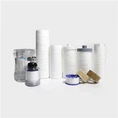
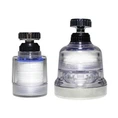
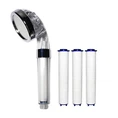
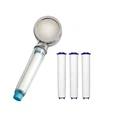
Faucet Filter
What is Faucet Filter
Faucet filters are compact, user-friendly devices designed to purify water directly at the tap. These filters utilize advanced filtration technologies to remove impurities, sediments, chlorine, and other contaminants that may affect the taste and safety of tap water. Faucet filters have emerged as a transformative solution, offering a convenient and effective way to enhance the quality of water right at the point of consumption.
Benefits of Faucet Filter
Improved water quality
The primary objective of faucet filters is to enhance the quality of your tap water. By reducing or eliminating common impurities, these filters deliver water that not only tastes better but also contributes to overall well-being. Enjoy the confidence of knowing that your drinking and cooking water is free from unwanted contaminants.
Convenience in installation
One of the standout features of faucet filters is their ease of installation. No need for complex plumbing work or professional assistance. Most models come with straightforward instructions, allowing users to install the filter themselves in a matter of minutes. This convenience makes them an accessible option for homeowners and renters alike.
Cost-effective solution
Investing in a faucet filter is a cost-effective approach to enjoying clean and safe water. The cost savings are further amplified by the reduction in the need for bottled water, contributing to both financial and environmental sustainability.
Preserving essential minerals
While removing harmful contaminants,faucet filters are designed to preserve essential minerals that contribute to the taste and health benefits of water. Unlike some purification methods that strip water of all elements, these filters strike a balance, ensuring that your water remains both pure and beneficial.




Why Choose Us
Rich experience
We have more than 20 years of experience in mechanical design and filter element production. We sincerely invite and welcome you to our company to discuss cooperation.
Excellent quality
Our products enjoy a good reputation. We have a strict production system and excellent product quality. It is a wise choice to choose us.
Advanced equipment
With 20 sets of PP melt-blown filter element production lines and 10 sets of activated carbon production lines, we mainly produce filter element manufacturing machines and various filter element products.
Production market
Our products have been exported to Asia, Europe, North America and Africa and more than 20 countries in the world, our customer give the good reputation for our products and service.

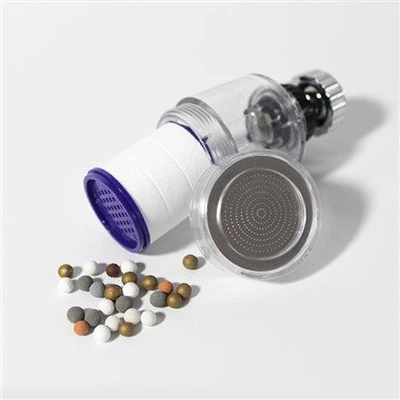
Faucet filters are attached directly to your faucet (usually in the kitchen). When you turn on the tap, water flows into the filter housing, which can be made of plastic or metal depending on the model. Inside, the water passes through a "sediment trap." This screen helps remove particles of sediment like dirt or sand. After that, the water is typically sent through a block of activated carbon and zeolite, which is full of pores that trap contaminants like chlorine.
What Do Faucet Filter Remove?
In addition to effectively removing taste and odor, chemicals, heavy metals, estrogens, pesticides and other contaminants, tap faucet filters can also filter out suspended pollutants, insects, algae and rust. It can also remove suspended impurities in the water.
Faucet filters cartridges or filtration media do much of the real work when it comes to ensuring water quality. Over time, they become less effective; for example, some act like sponges and can get ”full” when absorbing contaminants, while others are more like nets and eventually become less restrictive. When this happens, your “filtered water” is no longer quite so filtered, and that can lead to unpleasant tastes, odors and more. Depending on how many people are in your household and how much water you use from a single faucet, you may need to replace this filter every three months (or every six months maximum).

Types of Faucet Filter
Activated carbon filters
These filters use activated carbon or charcoal to absorb impurities and contaminants from water. Activated carbon is highly porous and has a large surface area, making it effective at removing chlorine, sediment, bad taste, and odor from tap water. Some activated carbon filters also include additional media to target specific contaminants like lead or heavy metals.
Ceramic filters
Ceramic filters consist of a porous ceramic cartridge that traps impurities as water passes through. They are effective at removing bacteria, protozoa, sediment, and some chemicals. Ceramic filters can be cleaned and reused, making them a cost-effective option for long-term use.
Reverse osmosis (RO) filters
RO filters use a semipermeable membrane to remove a wide range of contaminants from water, including dissolved salts, heavy metals, bacteria, and viruses. These filters provide highly purified water but may have a slower flow rate and produce wastewater as a byproduct.
UV (Ultraviolet) filters
UV filters use ultraviolet light to disinfect water by killing bacteria, viruses, and other microorganisms. They are often used in conjunction with other filtration methods to provide additional microbial protection. UV filters do not remove particulate matter or chemicals from water but are effective at sterilizing it.
Ion exchange filters
Ion exchange filters use resins to remove dissolved ions, such as calcium, magnesium, and heavy metals, from water. They work by exchanging ions in the water with ions on the resin surface. These filters are commonly used for water softening and can also reduce the concentration of certain contaminants.
Alkaline filters
Alkaline filters use a combination of minerals, such as calcium, magnesium, and potassium, to raise the pH of water and make it more alkaline. These filters may also include activated carbon or other media to remove impurities while adding beneficial minerals to the water.
How To Install Faucet Filter
Turn off the water source: Before installing the faucet filter, you need to turn off the water source first. Generally speaking, the switch to turn off the water source is located on the water valve console next to the water pipe. Pay attention to check the water pressure after turning it off to completely stop the water flow in the pipe.
Remove the original faucet mouth: Use a screwdriver to unscrew the old mouth or filter from the faucet mouth.
Install the filter: Insert the new faucet filter into the faucet mouth, and be careful not to lose the rubber gasket in the middle.
Adjust the angle: Adjust the filter to the desired angle and fix the filter on the faucet by rotating the fastening screws.
Test the water flow: A more important step is to turn on the water source with the faucet and test whether the water flow is normal. If the water flow is too small or the filter element is not effective, you need to check the water pressure and installation, and determine whether the installation is firm and whether the filter element is installed correctly.
How to Choose the Right Faucet Filter
Filtration technology: Different filters employ various technologies, including activated carbon, ceramic, reverse osmosis, and more. Understanding the filtration mechanism of a specific model is crucial in selecting a filter that aligns with your water quality goals.
Flow rate: Consider the flow rate of the filter, as it can impact the convenience of water usage. Opt for a filter that maintains an optimal flow while effectively purifying the water.
Filter lifespan: The lifespan of the filter determines how often replacements are necessary. Choose a model with a filter replacement indicator for timely and hassle-free maintenance.
Compatibility: Ensure that the chosen filter is compatible with your faucet type. Most point-of-use filters are designed to fit standard faucets, but it’s essential to confirm compatibility for a seamless installation process.
Rate of flow and pressure of the water: A good filter should not significantly reduce the flow rate of your faucet, which is measured in gallons per minute (GPM). A typical home water pressure of 40-60 psi is sufficient for the majority of faucet filters to function properly. If you want to avoid filter damage or decreased efficiency, ensure that the model you choose is compatible with the water pressure in your home.
Components of Faucet Filter
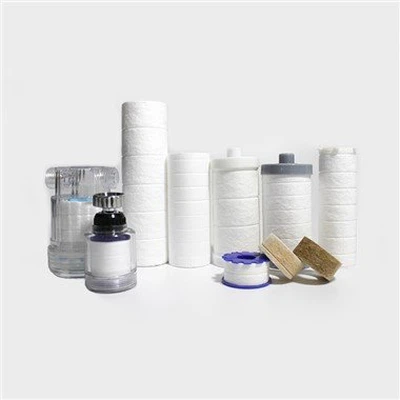
Filter housing: This is the outer casing of the faucet filter, which houses all the internal components. It is usually made of durable materials like plastic or metal and is designed to withstand water pressure and temperature fluctuations.
Filter cartridge: The filter cartridge is the heart of the faucet filter. It contains the filtering media, which could be activated carbon, ceramic, or other materials depending on the specific filtration needs. The cartridge removes impurities, such as sediment, chlorine, heavy metals, and other contaminants, from the water as it flows through.
Faucet adapter: The faucet adapter is the part of the filter that attaches to the faucet. It typically comes with various adapters or fittings to ensure compatibility with different faucet types and sizes. The adapter allows water to flow from the faucet into the filter for purification.
Switch or diverter valve: Some faucet filters come with a switch or diverter valve that allows users to switch between filtered and unfiltered water. This feature is convenient when filtered water is not needed, such as for washing dishes or filling pots.
Spout or nozzle: The spout or nozzle is the outlet through which filtered water is dispensed. It is usually located at the bottom of the filter housing and can be rotated or adjusted to direct the flow of water.
Indicator or reminder: Some faucet filters come with an indicator or reminder mechanism to alert users when it's time to replace the filter cartridge. This ensures that the filter continues to provide optimal filtration performance.
Mounting hardware: Depending on the design of the faucet filter, it may include mounting hardware such as screws or brackets for securing the filter to the faucet. This ensures stability and prevents the filter from accidentally falling off.
Seals and O-rings: Seals and O-rings are used to create watertight connections between the various components of the faucet filter, preventing leaks and ensuring efficient filtration.
Directly observe the filter color: If the filter of the faucet filter is visible, you can judge whether it needs to be replaced by observing the color change of the filter. For example, if the color of the filter becomes darker, it means that the filtering effect has decreased and it may need to be replaced.
Water flow test: After installing the filter, when the water flow of the water outflow weakens or becomes unstable, it means that the faucet filter needs to be replaced. This is because impurities and other substances in the filter will hinder the water flow when they accumulate.
Test water quality: If the water quality of the water outflow begins to change or has a strange smell, it means that the filter needs to be replaced. At the same time, you can also test the water quality of the water outflow to detect whether the filter effect needs to be replaced.
FAQ