



If you've ever stood at your kitchen sink mid-morning, waiting for your faucet filter to do its job before filling your coffee maker, you've probably asked yourself this question: How often do I actually need to replace that thing? As a faucet filter supplier who's spent the last eight years talking to thousands of homeowners, plumbers, and even small restaurant managers about their water quality, I can tell you this isn't a one-size-fits-all answer. But it is an important one-neglecting your filter doesn't just mean you're drinking unfiltered water; it can also damage your pipes, make your appliances work harder, and even cost you more in the long run. Let's break this down with real, practical details, no fancy jargon, so you know exactly when to swap out your filter.
First, let's get one thing straight: faucet filters aren't permanent. They work by trapping tiny contaminants-sediment, chlorine, lead, microplastics, even some bacteria-and over time, those contaminants fill up the filter's pores. Once that happens, the water can't flow through properly, and the filter stops doing its job. Think of it like a coffee filter: after a few uses, the grounds clog the holes, and your coffee tastes weak or bitter. A faucet filter is the same, but for your entire household's water use.
Most manufacturers will slap a "replace every 3 months" or "replace every 6 months" label on the box, but that's a general rule, not a hard law. Why? Because how often you use your water, how dirty your local tap water is, and what type of filter you have all play a huge role. Let's start with the two most common filter types out there, since they make up 70% of the filters we supply at our facility: PP tap water faucet filter elements and tap water faucet PP cotton filter elements. These are the workhorses of the kitchen, and their replacement timelines differ based on use.
For example, if you live in an area with hard water, like parts of Texas, Arizona, or Florida, your filter is going to clog faster. Hard water has high levels of calcium and magnesium, which leave mineral deposits on and inside the filter. We designed our kitchen tap filter for hard water with extra thick PP cotton layers to handle those minerals, but even that has a limit. If you're filling 5-gallon jugs for drinking water every week, doing three loads of dishes a day, and watering your plants with filtered water, your filter will need to be swapped every 2-3 months. On the other hand, if you live in a soft water area, only use filtered water for drinking and cooking, and run your faucet 10 times a day, you could stretch that to 5-6 months.
I've seen this first-hand with a customer in Chicago who called us last year saying her filter was only lasting 2 months. When we asked about her water, she mentioned her building had a old pipe that was constantly flaking rust into the water-something she didn't even notice until her filter turned a reddish-brown after three weeks. We recommended a higher-density PP tap water faucet filter element, which held more sediment, but even that she had to replace every 3 months instead of the standard 6. That's the thing: local water quality is the biggest factor most people overlook. If you have visibly cloudy water, odd tastes or smells, or your area has recently done pipe repairs, your filter is working overtime, and you'll need to replace it more often.
Another big variable is the type of filter system you have. We supply three main faucet filter styles, and each has its own replacement schedule:
The first is the under-sink mini filter, our kitchen mini tap water filter. This small, compact unit fits under most kitchen sinks and filters water right before it comes out of the faucet. Because it's close to the tap, it's exposed to the same water pressure and contaminants as your regular faucet, but its small size means it clogs faster. For most households, this needs to be replaced every 3 months, but if you have a family of four, that timeline drops to 2 months. We had a family with two toddlers last year who called us in a panic because their mini filter stopped working, and when we checked, they were using it for everything-bottle water, pasta, even making ice. They went through twice as much water as a single person, so their filter wore out in half the time.
The second is the kitchen faucet PP cotton filter cartridge, which attaches directly to the end of your faucet. This is the most popular type because it's easy to install-no tools needed, just screw it on. But because it's at the faucet tip, it's also exposed to more physical gunk: food scraps, dish soap residue, even hair from hands washing. For this type, we usually recommend replacement every 4 months for a standard household, but if you have a garbage disposal, you might need to swap it every 3 months. The disposal grinds up food that can get washed into the faucet, and that gunk clogs the filter's pores quickly. I remember a plumber in Detroit who told us he replaces these filters for his clients every 2.5 months during the summer, when everyone is grilling and washing a lot of greasy dishes. The grease from the dishes coats the filter, making it useless in no time.
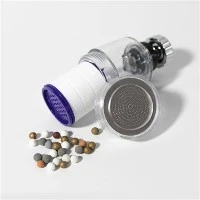
The third type is our kitchen tap filter for hard water, which is designed specifically for areas with high mineral content. These filters have a mixed media blend of PP cotton and ion-exchange resin, which not only traps sediment but also softens water by removing calcium and magnesium. Because of the extra layers, these filters last longer-usually 6 months for a standard household in hard water areas. But if you have a large home with multiple bathrooms using hard water, or you run a small café that uses filtered water for espresso, you'll need to replace these every 4 months at most. The resin gets saturated with minerals, and once that happens, it can't soften water anymore.
Now, let's talk about the warning signs that your filter needs replacing, because these are often more reliable than any calendar. Don't wait for the 3-month mark to roll around-watch for these red flags:
First, reduced water flow. If your faucet used to fill a glass in 2 seconds, and now it takes 5 or 6, that's a clear sign the filter is clogged. The pores are full of contaminants, so water can't pass through. I've had customers tell me they thought their faucet was broken, but it was just a dirty filter. It's an easy fix, and it saves you from calling a plumber for no reason.
Second, changes in taste or smell. If your water starts tasting like chlorine, metallic, or even has a faint moldy smell, your filter is no longer working. Chlorine is a common disinfectant in tap water, and while it's safe in small amounts, it tastes terrible. A good filter should remove most of that chlorine. If you still taste it, the filter is saturated and can't trap it anymore. We've had customers tell us they thought their water supplier had messed up, but it was just a filter that needed changing.
Third, visible debris in the water. If you see tiny black specks, sediment, or even rust coming out of your faucet, that means your filter is full and letting contaminants pass through. This is a big safety sign-especially if you have young kids or pregnant people in the home. You shouldn't have to see anything in your drinking water, so if you do, replace the filter immediately.
But wait-what if you're not sure? How can you tell if your filter is working or not? We always recommend doing a simple test at home. First, check the expiration date on the filter when you buy it. Even if you don't use it, filters can degrade over time, so don't buy a filter that's past its expiration date. Second, do a visual check every month: unscrew the filter (if it's the end-of-faucet type) and look at it. If it's brown, gray, or has obvious gunk on it, it's time to replace it. If it's still white and looks clean, you can keep using it for another month, no problem.
Another thing to keep in mind: regular maintenance. Even if you're on a strict replacement schedule, a quick rinse of the filter every few weeks can extend its life. For end-of-faucet PP cotton filters, just take them off, rinse them under running water for 30 seconds, and put them back on. This will remove loose sediment and keep the pores open. Don't overdo it, though-too much rinsing can damage the filter's structure, making it less effective at trapping contaminants.
Now, let's address a common myth: some people think a more expensive filter lasts longer. That's not always true. A high-quality PP tap water faucet filter element from a reputable supplier will last longer than a cheap, no-name filter, but the timeline still depends on your water use and local quality. We had a customer who bought a $20 filter from a grocery store instead of our $35 filter, and it only lasted 1 month because it was made of thin, low-density cotton that clogged quickly. Our filters use food-grade PP cotton that's thicker and more porous, so they trap more contaminants without restricting water flow. That's why we always recommend buying from a trusted supplier-cheap filters end up costing you more in the long run because you have to replace them more often.
So, putting this all together, what's the short answer? For most standard households, using a PP cotton filter at the faucet tip, replace every 3-5 months. If you have hard water, go with the hard water filter and replace every 5-6 months. If you use a mini under-sink filter, replace every 2-3 months. But always watch for the warning signs: reduced flow, bad taste, visible debris, or a dirty-looking filter. These are more reliable than any calendar.
At the end of the day, your faucet filter is your first line of defense against contaminants in your tap water. Replacing it on time ensures you're drinking clean, safe water, and it also protects your pipes and appliances from mineral buildup and sediment damage. If you're not sure which filter is right for your home, or you need a bulk order for your business, we're here to help. Our team can answer any questions about filter types, replacement timelines, or installation. Contact us today to learn more and get a custom quote for your needs.
