


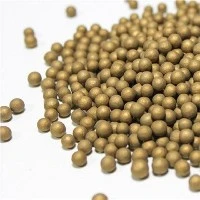
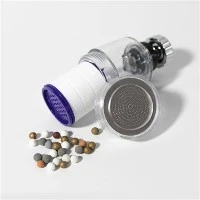
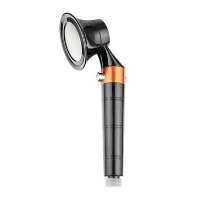

As the owner of a ceramic ball filter supply business, I get asked this question all the time: "What happens to those little ceramic balls inside my filter after months or even years of use?" It's such a critical query because so many water system owners rely on these unassuming spheres to keep their water clean, safe, and functional. When I started in this industry, I'll admit I didn't dive as deep into the long-term performance of these balls as I should have-back then, I was more focused on getting the right products out the door. But over the past decade, as I've worked with residential homeowners, commercial aquarium operators, and municipal water treatment teams, I've learned that understanding the long-term effects of use on ceramic ball filters isn't just technical-it's how we make sure our clients' systems run smoothly, effectively, and efficiently for years on end.
Let's start with the basics. Ceramic ball filters work because of the unique properties of the ceramic material we craft them from. When we make our filters, we engineer each ball to have a porous structure that traps contaminants, plus specific additives designed for things like chlorine removal, pH adjustment, and bio-filtration. When a client first installs, say, our Micro Porous Anti-bacterial Ceramic Ball Filter, the balls are fresh with sharp, well-defined pore structures, and their anti-bacterial agents are at peak potency. But like any component in a water system, they interact with water, sediment, and even organic matter over time-so changes are inevitable. The key is knowing which changes are normal, which are a sign of maintenance, and which mean it's time for replacement.
First, let's talk about the most common effect: pore fouling. Over time, tiny particles like sediment, rust, dissolved organic matter, and even mineral scale can get stuck in the micro-pores of the ceramic balls. When this happens, the filtration efficiency drops because the pores that used to trap contaminants become clogged. I've seen this firsthand with clients who run their filters in areas with hard water-minerals like calcium and magnesium build up on the ball surfaces and in the pores, creating a layer that blocks water flow and reduces the ball's contact with the water. For example, a restaurant client I worked with last year had their Food Grade Chlorine Removal Ceramic Ball filter run at 95% chlorine removal when new, but after 18 months of use without backwashing, it was only removing 62% of chlorine. That's a big drop, and it was directly from pore fouling. The good news here is that this is often reversible with proper maintenance-like backwashing the filter regularly, or occasionally flushing the balls with a mild acid solution to dissolve mineral scale.
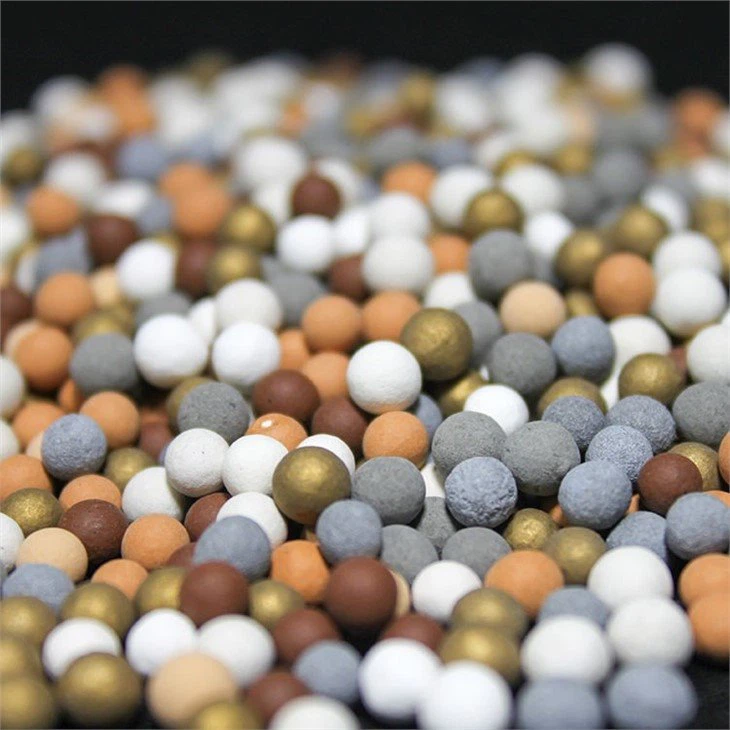

Another effect I see is the gradual release of functional additives. Our ceramic balls aren't just inert material-they're infused with specific minerals and compounds tailored to their purpose. Our MPH Alkaline Ceramic Balls Filter, for instance, is designed to raise the pH of water and add essential minerals like calcium, potassium, and magnesium. When new, these balls release those minerals quickly, which is why water run through them has a noticeable alkaline, mineral-rich taste. But over long-term use, the surface compounds leach out, and the inner layers take time to migrate to the surface, so the mineral release slows down. This is a natural process-we expect it. We recommend replacing MPH alkaline balls every 2-3 years, depending on water usage, because after that, the mineral release is so minimal it no longer provides the benefit clients rely on. The same goes for our Bio Descaling Ceramic Balls for Water Filtration System-the bio-ceramic agents that prevent scale buildup and support beneficial bacteria in aquariums or commercial systems will gradually deplete over time, reducing their ability to keep scale at bay and maintain a healthy bio-film.
Wear and tear is another factor, especially in high-flow or high-pressure systems. Ceramic is durable, but it's not indestructible. When balls rub against each other as water flows through the filter tank, small particles can chip off the surface. Over years of use, this can turn into fine ceramic dust that ends up in the filtered water. I've had a few clients with aquarium filters reach the 5-year mark and notice tiny specks in their tank water- that's almost always from worn ceramic balls. The dust isn't toxic, but it can cloud water and might irritate fish gills. To prevent this, we design our balls to be high-density and rounded, but even the best ceramic will wear eventually. For residential filters, this is usually a gradual process, but commercial or industrial systems with 24/7 operation might see noticeable wear after 3 years.
Now, let's talk about something that surprises a lot of people: the impact of proper maintenance on extending the long-term performance of ceramic balls. I've had a client who ran their Maifan Stone Alkaline Ceramic Balls for Shower Filter for 4 years without replacement, just by doing monthly flushes to remove mineral buildup. They told me their shower water still felt soft and had a slight mineral content, which is way longer than the typical 2-year replacement window. On the flip side, another client who skipped maintenance entirely had to replace their balls after just 12 months because of severe fouling and mold growth in the pores. Mold and bacterial growth are actually a risk if balls are not cleaned-foul odors or discolored water coming through the filter is a sign that the pores are so clogged that organic matter is starting to decompose. This is why regular backwashing and, when needed, soaking balls in a mild hydrogen peroxide solution can keep them performing well for much longer.
I should also address a common myth: some people think ceramic balls can last forever if you just "rinse them off occasionally." That's not true. The additives that give the balls their specific function-whether it's chlorine removal, alkalinity, or bio-filtration-are finite. They leach out over time, even with perfect maintenance, so at some point, they'll no longer work as intended. For example, our food-grade chlorine removal balls use activated carbon and silver ions to neutralize chlorine and kill bacteria. After 2-3 years of daily use, those silver ions are mostly depleted, so even if you rinse the balls, they won't kill bacteria anymore or remove chlorine effectively.
Another point to consider is water quality itself. If your source water is very high in contaminants-like heavy metals, industrial runoff, or excess sediment-ceramic balls will degrade faster. I work with a small brewery that uses our ceramic ball filters for their process water. Their water has high levels of tannins from their local water source, which cling to the ceramic pores and break down the anti-bacterial coating much quicker. They have to replace their balls every 18 months instead of the usual 2-3 because of that. Conversely, clients with clean, well water or municipal water with low sediment can often extend ball life by 6-12 months just by being mindful of their source water's quality.
So what does all this mean for you, the person relying on a ceramic ball filter? Let's break it down into practical takeaways, based on what I've learned from years of working with these products:
First, know your ball type and its intended lifespan. Our micro porous anti-bacterial balls have a 3-4 year lifespan with proper maintenance, our food-grade chlorine removal balls last 2-3 years, MPH alkaline balls 2-3 years, bio descaling balls 2-3 years, and our maifan stone shower balls last 1.5-2 years. Don't skip replacement just because the filter is still "working"-if it's not performing like it did when new, that's the sign it's time to switch.
Second, follow a maintenance routine. For most residential systems, backwashing the filter once a month, or flushing the ceramic balls with clean water to remove surface sediment, is enough. If you have hard water, add a quarterly flush with a 10% white vinegar solution to dissolve mineral scale. For commercial systems, weekly backwashing and annual deep cleaning are standard practices we recommend to our clients.
Third, pay attention to signs of wear or degradation. If you notice your filtered water has a strange taste or odor, is less clear, or if the flow rate through the filter has slowed down significantly, those are all red flags. I've seen clients ignore these signs and end up with water quality issues that affected their family's health or their business operations. It's always better to catch these early.
At the end of the day, ceramic ball filters are a reliable, cost-effective way to improve water quality, but they're not set-it-and-forget-it components. As a supplier, my goal isn't just to sell you a set of balls-it's to make sure you understand how they perform over time, so you can get the best value out of your investment. If you're not sure what kind of ceramic ball filter is right for your system, or if you have questions about maintaining your current balls, I'm here to help. Whether you need replacement balls for a residential under-sink filter, a commercial aquarium system, or an industrial water treatment setup, we have the products engineered to perform consistently over the long term.
If you're ready to talk about your ceramic ball filter needs-whether you're replacing old balls, upgrading your system, or just want to learn more about how to get the most out of your filter-reach out to our team to discuss your requirements, get personalized recommendations, or place an order. We work with clients of all sizes, from individual homeowners to large commercial operations, and we're dedicated to providing high-quality ceramic ball filters that deliver results for years.