

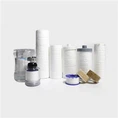
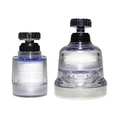
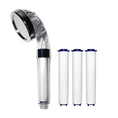
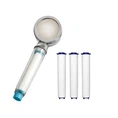
Shower filters mainly have the following types:
1.PP cotton filter element:
Filtration principle: Mainly use the physical filtering characteristics of PP cotton. Its material has a fine fiber structure, just like a fine sieve, which can effectively intercept large particles of impurities such as mud, rust, and insect eggs in the water.
Advantages: The filtering effect is relatively basic and obvious, and it can preliminarily purify the water quality. The price is relatively cheap and the replacement cost is low.
2.Activated carbon filter element:
Filtration principle: Activated carbon has a rich pore structure and has a strong adsorption capacity. It can absorb discoloration, odor, residual chlorine and some organic matter in the water, such as pesticide residues and industrial wastewater pollutants in the water.
Advantages: The dechlorination effect is better, which can improve the taste and smell of water, making the shower water purer and odorless. Moreover, the filtering speed of the activated carbon filter stick is relatively fast, and it will not cause obvious obstruction to the water flow.
3. Ultrafiltration membrane filter element:
Filtration principle: The filtration pore size of the ultrafiltration membrane is very small, which can filter out bacteria, viruses, macromolecular pollutants, etc. in the water, but at the same time it can retain some mineral ions and water that are beneficial to the human body.
Advantages: High filtration accuracy, can provide relatively high-quality shower water, reduce bacterial damage to the skin, and is suitable for people with high requirements for water quality.
4.KDF alloy filter element:
Filtration principle: The material of this filter rod is composed of various metal elements such as copper, zinc, and silver. Through chemical reactions, it can remove heavy metal ions in the water, such as lead, mercury, cadmium, etc. It also has the function of sterilization and increasing the oxygen content in the water, and can effectively remove rust and some heavy metal residues deposited in the pipes, while inhibiting fungal growth.
Advantages: The filtration effect is significant, the ability to improve water quality is strong, and it can provide users with high-quality shower water.
5. Vitamin C filter element:
Filtration principle: Vitamin C has a certain reducing property, and can react chemically with residual chlorine in the water to convert residual chlorine into harmless substances, thereby achieving the purpose of removing residual chlorine.
Advantages: While removing residual chlorine, some products claim that vitamin C has a certain nourishing effect on the skin, which may make the skin smoother and more delicate.
6. Negative ion filter element:
Filtration principle: Through special materials or structures, negative ions are generated when water flows through. Negative ions can change the molecular structure of water, making it softer, and may have a certain antioxidant effect, which is beneficial to human health.
Advantages: It can improve water quality and bathing experience, make the water flow more comfortable, and make people feel more relaxed during the shower.
If you are deeply interested in shower filters, welcome to visit www.angefilter.com! You will find a vibrant communication platform, where industry information, product displays, application cases, etc. Our professional team will also be on call to listen to your needs at any time.