

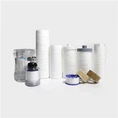
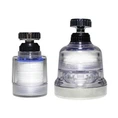
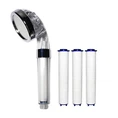
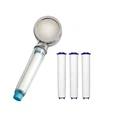
A filter cartridge works by physically or chemically separating contaminants from a fluid (liquid or gas) as the fluid passes through a structured, porous medium. Its operation relies on a combination of mechanical sieving, adsorption, and other capture mechanisms, all within a self-contained, replaceable unit. Below is a step-by-step breakdown of its working principle, key mechanisms, and flow dynamics:
1. Basic Flow Path & Sealing
First, the filter cartridge is installed in a filter housing (a sealed pressure vessel), with gaskets/end caps creating a tight seal to force all fluid through the cartridge's filter medium-no unfiltered fluid can bypass the medium. The fluid (liquid/gas) enters the housing, flows through the cartridge's porous structure, and exits as purified fluid, while contaminants are trapped inside or on the surface of the cartridge.
2. Core Contaminant Capture Mechanisms
Filter cartridges use multiple complementary mechanisms to trap particles and contaminants, depending on the medium type and application:
(1) Mechanical Sieving (Size Exclusion)
The most fundamental mechanism: the filter medium has tiny, controlled pores or gaps. Contaminants larger than the pore size are physically blocked on the cartridge's surface (surface filtration) or within the medium's internal structure (depth filtration).
* Surface filtration: Particles collect on the outer layer (e.g., mesh, membrane cartridges); easy to clean/replace, ideal for large sediment.
* Depth filtration: The medium is a thick, layered porous structure (e.g., pleated polypropylene, melt-blown fiber); particles smaller than surface pores get trapped deep within the matrix, offering higher dirt-holding capacity.
(2) Adsorption (Chemical/Physical Attraction)
Common in activated carbon cartridges and some specialty media: contaminants (e.g., organic compounds, chlorine, odors, heavy metals) are not sieved but adhere to the surface of the medium via van der Waals forces, chemical bonding, or electrostatic attraction. The medium's high surface area (e.g., porous carbon) maximizes adsorption capacity.
(3) Electrostatic Attraction
Some fibrous media (e.g., melt-blown polypropylene) carry a static charge. Even sub-micron particles (too small for sieving) are drawn to and trapped by the charged fibers, enhancing fine particle removal.
(4) Inertial Impaction & Diffusion
For very small particles (sub-micron to micron scale):
* Inertial impaction: Fast-moving particles cannot follow the fluid's curved flow paths around medium fibers and collide with the fibers, getting trapped.
* Diffusion: Tiny particles move randomly (Brownian motion) and bump into medium fibers, increasing capture chance-critical for fine dust, aerosols, or microbes.
(5) Ion Exchange (Specialized Cartridges)
Resin-based cartridges use ion exchange: harmful ions (e.g., calcium/magnesium for water softening, lead/arsenic) in the fluid are swapped for harmless ions (e.g., sodium, hydrogen) on the resin beads, purifying the fluid at the molecular level.
3. Filtration Modes: Surface vs. Depth
The cartridge's design dictates how contaminants are retained, which impacts performance:
| Mode | How It Works | Key Traits | Example Cartridges |
| Surface Filtration | Contaminants block the outer surface of the medium | Low dirt-holding capacity, fast pressure drop rise, easy backwashing | Membrane cartridges, mesh filters, woven fabric filters |
| Depth Filtration | Contaminants penetrate and are trapped throughout the thick medium | High dirt-holding capacity, slower pressure drop increase, longer service life | Pleated fiber cartridges, melt-blown polypropylene, ceramic cartridges |
4. Lifecycle Dynamics: From Clean to Clogged
(1) Initial Stage: The clean cartridge has low pressure drop; fluid flows freely, and contaminants are captured via the mechanisms above.
(2) Loading Stage: Trapped contaminants accumulate on/within the medium, gradually blocking pores. This increases pressure drop (the resistance to flow) across the cartridge.
(3) End of Service Life: When pressure drop exceeds the system's threshold (or flow rate drops too low), the cartridge is either:
* Replaced (disposable cartridges, most common for residential/industrial use).
* Cleaned (reusable cartridges, e.g., ceramic, metal mesh) via backwashing, ultrasonic cleaning, or chemical flushing to remove trapped contaminants and restore flow.
5. Key Performance Factors
* Pore Size Rating: Defines the smallest particle the cartridge can remove (nominal vs. absolute rating).
* Dirt-Holding Capacity: The total contaminant mass the cartridge can trap before clogging (depth filters excel here).
* Pressure Drop: Resistance to flow-lower initial drop is better, and a slow rise extends service life.
* Material Compatibility: The medium must resist chemical degradation, temperature extremes, or fouling from the fluid (e.g., food-grade materials for beverages, chemical-resistant plastics for industrial solvents).
In summary, a filter cartridge is a engineered barrier that combines physical, chemical, and electrostatic forces to separate contaminants, with its design optimized for specific fluid types, contaminant sizes, and purity requirements across residential, commercial, and industrial applications.