



If you've ever opened a tap and noticed tiny orange or brown specks floating in your drinking water, you've likely encountered rust contamination. Rust is a common water quality issue, caused by corroded iron pipes, old plumbing systems, or even iron-rich groundwater, and it not only looks unappealing but can also affect taste and, over time, leave stains on fixtures, laundry, and dishes. As a supplier of water sediment PP melt blown filter elements, one of the most frequent questions I get from homeowners, plumbers, and small business owners is: Can these filters actually remove rust from water?
It's a valid question, and the answer isn't a simple yes or no-it depends on the type of rust, its particle size, and how the PP melt blown filter is built. Let's break this down with real-world experience and technical details, drawing on what our customers have tested and used over the years.
First, I should clarify what we mean by "rust" in water. Rust typically comes in two forms: particulate rust and dissolved iron. Particulate rust is the visible stuff-tiny, suspended solid particles of iron oxide that range in size from less than 1 micron up to 100 microns or more. Dissolved iron, on the other hand, is iron that's chemically mixed into the water, so it doesn't appear as specks until it oxidizes (turns back into solid rust) when exposed to air, usually as brown stains. This is an important distinction because PP melt blown filters work exclusively on particulate contaminants, not dissolved chemicals.
That brings us to how PP melt blown filters work. These filters are made by melting polypropylene (PP) resin and spinning it into fine, tangled fibers that form a porous, depth-loading structure. Unlike surface filters that only catch particles on their outer layer, depth filters trap contaminants throughout the thickness of the fiber mat. This design is great for sediment because it uses the full volume of the filter to catch and hold particles, rather than clogging quickly on the surface.
Now, back to rust. The key here is particulate rust particle size. Most visible rust in household water is in the 1 to 50 micron range. That's where our core line of PP Melt Blown Sediment Water Filter Cartridges shines. For example, a 5-micron rated PP melt blown filter will catch nearly all particulate rust particles larger than 5 microns. A 1-micron rated version will get even the smaller, more tiny rust specks that can make water look cloudy.
I've seen this firsthand with a customer in a small neighborhood with 50-year-old iron pipes. They were dealing with so much rust that their dishware had permanent brown spots after each wash. They started with our standard PP Melt Blown Sediment Water Filter Cartridge in a whole-house system, and within a week, the visible rust specks were gone. The key was matching the micron rating to their rust particle size-they initially tried a 20-micron filter, which let too much small rust through, but switching to a 5-micron made all the difference.
That's also why our 10 Inch 20 Inch PP Cotton Water Filter Cartridges are popular for rust removal. The size options mean you can choose the right length for your system: 10-inch for under-sink or point-of-use applications, and 20-inch for whole-house systems that need to process more water at once. Both sizes are available in multiple micron ratings, so you can tailor them to your specific water's rust level. For lighter rust issues, a 20-micron might work to catch larger particles, while heavy rust will need a 1 or 5-micron option.
But here's a critical point PP melt blown filters can't remove: dissolved iron. If your water has rust that doesn't appear as specks but turns into stains after sitting, that's almost always dissolved iron. PP filters can't filter out these microscopic, dissolved iron molecules because their pore structure is sized to catch solid particles, not dissolved chemicals. For dissolved iron, you'd need a different type of filter, like an ion exchange or water softener, but PP melt blown filters are still the first line of defense against the visible, particulate rust that most people deal with on a daily basis.
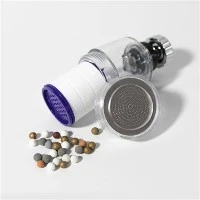
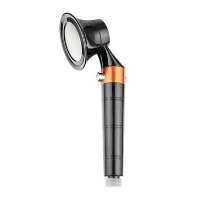
Another common scenario is shower water with rust. Many people don't realize that shower filters can also catch rust, and that's where our Micron Level PP Melt Blown Shower Filter Element comes in. Shower water rust is often made up of smaller particulate particles that come loose from pipes as hot water expands and contracts. Our shower-specific PP filter is designed to handle the higher flow rate of shower water while still catching those tiny rust specks, so your shower water stays clear and doesn't leave brown stains on your shower walls or clothes. We've had customers say that after installing these shower filters, their white towels no longer have rust streaks after washing-this is exactly the type of particulate rust removal we're talking about.
For point-of-use applications, like under-sink faucets or kitchen taps, our Universal Faucet Filter Replacement Cartridge is a go-to. These are compact, fit most standard faucet filter housings, and are available in 5-micron ratings that catch the rust particles you'd see in drinking water. They're easy to replace every 2-3 months, depending on water usage, and are a simple, affordable fix for kitchen tap rust issues.
And if you need a filter that works for general point-of-use or whole-house sediment and rust removal, our Micron Level PP Melt Blown Water Filter Cartridge line includes even more options for specific micron sizes and flow rates. We offer custom sizes and ratings too, for commercial applications like small restaurants or office buildings that need consistent rust removal for their water systems.
One thing I always tell customers is that the effectiveness of a PP melt blown filter for rust removal depends on regular replacement. Because the depth-loading design traps particles throughout the filter, over time it gets clogged with rust and other sediment. If you don't replace it on schedule, the filter will become less effective at catching particles, and water pressure will drop. For household systems, we recommend replacing sediment filters every 3-6 months, depending on your water quality. If you have very high levels of rust, you might need to replace them every 2 months to keep them working properly.
I should also mention that PP melt blown filters are different from other types of sediment filters, like string-wound or pleated filters, in a couple of key ways. String-wound filters use string wrapped around a core, and their filtration rating can be less consistent than the depth structure of PP melt blown. Pleated filters have a large surface area, but they tend to clog faster on large particles, making them less ideal for heavy rust issues. PP melt blown filters balance depth loading, consistent micron ratings, and affordable cost, which is why they're such a popular choice for rust removal.
Of course, every home's water is unique, so the best way to know if a PP melt blown filter will work for your rust is to test your water. Most local hardware stores sell affordable water test kits that can tell you the type and size of rust particles, or you can send a sample to a local water testing lab. Once you know your rust's particle size, you can match it to the right micron rating filter. For example, if your test shows rust particles averaging 10 microns, a 5-micron filter will catch nearly all of them, giving you clear water.


As a supplier, I've worked with hundreds of customers who've seen real results from these filters. A small café in a rural area with well water had rust in their ice machine, which made their drinks look unappetizing. They installed our 5-micron whole-house PP filter, and within a week, their ice was clear and their customers stopped commenting on the brown specks. Another customer, a family with young kids, had rust in their bathroom sink that was making their toddler's bath water look orange. They used our faucet replacement filter cartridge, and after the first replacement, the bath water was clear.
At the end of the day, if your rust is particulate, solid, and visible as specks in your water, a PP melt blown sediment filter will absolutely remove it. The key is choosing the right micron rating for your specific rust size, using the right size filter for your system, and replacing it regularly. For dissolved iron, you'll need a different solution, but PP melt blown filters are the first and most cost-effective step for the rust problems most people face.
If you're looking to tackle rust in your water, or if you have questions about which filter is right for your system, we're here to help. We offer a range of PP melt blown filter elements for all applications, from point-of-use faucets to whole-house systems and commercial use, with different micron ratings and sizes to fit your needs. Reach out to our team to discuss your water quality needs and find the right filter for you.