

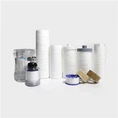
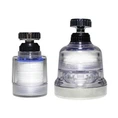
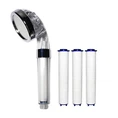
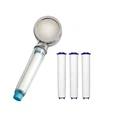
The main purpose of PP (Polypropylene) string wound filters is to effectively remove impurities and contaminants from water through depth filtration. These filters are widely used in various water treatment applications to achieve clean and safe water for consumption, process use, or other purposes.
1)Particle Removal: PP string wound filters are designed to capture a wide range of suspended solids and particulate matter present in water, including sediment, sand, dirt, rust, scale, and other debris. The tightly wound polypropylene strings create a dense matrix that acts as a barrier, trapping particles as water flows through the filter media.
2)Depth Filtration: Unlike surface filters that rely on a thin layer to capture particles, PP string wound filters utilize depth filtration. The winding pattern of the strings creates a tortuous path for water flow, allowing for the retention of particles throughout the depth of the filter media. This depth filtration mechanism ensures thorough removal of contaminants and provides a high dirt-holding capacity.
3)Micron Rating Selection: PP string wound filters are available in a variety of micron ratings, ranging from coarse to fine filtration. The choice of micron rating depends on the specific water quality requirements and application needs. Common micron ratings for PP string wound filters include 1, 5, 10, 20, and 50 microns, allowing for precise filtration tailored to the desired level of particle removal.
4)Pre-Filtration: PP string wound filters are often used as pre-filters in water treatment systems to protect downstream equipment, such as reverse osmosis membranes, from fouling and damage caused by suspended solids and particulate matter. By removing larger particles before they reach the main treatment unit, PP string wound filters help improve overall system performance and longevity.
5)Versatile Applications: PP string wound filters find applications in a wide range of industries and settings, including residential, commercial, and industrial environments. They are commonly used in point-of-use and point-of-entry water filtration systems, as well as in process water treatment applications in manufacturing, food and beverage, pharmaceutical, and other industries.
6)Chemical Compatibility: Polypropylene is chemically inert and resistant to a wide range of chemicals, making PP string wound filters suitable for use with various water types and treatment chemicals. They are compatible with both acidic and alkaline solutions, as well as many corrosive substances, without degradation of the filter media.
https://www.angefilter.com/