


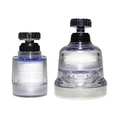
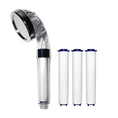
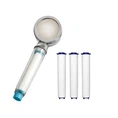
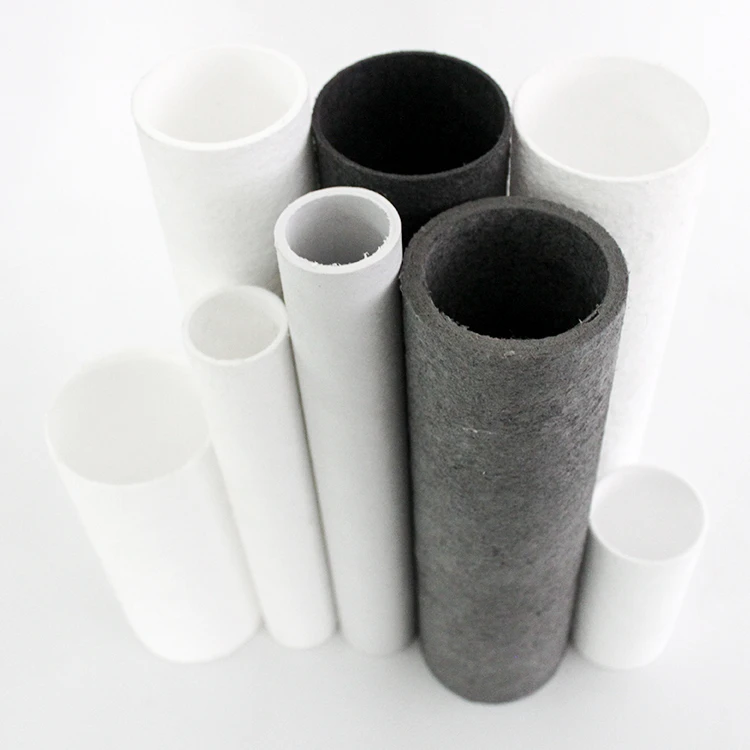
The structure of the PP melt-blown filter element is a structure with thick outer fibers, thin inner fibers, loose outer layers, and tight inner layers. The unique gradient depth filtration forms a three-dimensional filter residue effect, which has the characteristics of high porosity, high retention rate, large dirt holding capacity, large flow rate and low pressure drop.
The melt-blown process is a kind of non-woven process of extruding polymers. It originated in the early 1950s. In order to collect radioactive particles produced by nuclear tests, the U.S. Naval Laboratory began to develop filter materials with ultra-fine filtration effects. In 1954 published research results. my country's meltblown technology originated in the late 1950s and early 1960s, and the equipment studied was intermittent. By the late 1960s and early 1970s, the number of batch meltblown equipment in China had reached more than 200. Continuous production lines were introduced from the US and Germany around 1992-94. So far, it is estimated that there are still more than 300 intermittent meltblown equipment in operation across the country.
In theory, any thermoplastic (high temperature melting, low temperature curing) polymer chip raw materials can be used in the production process of meltblown filter elements. Polypropylene is the most widely used chip raw material for melt blown process. In addition, the commonly used polymer chip raw materials for melt blown process include polyester, polyamide, polyethylene, PTFE, polystyrene, PBT, EMA , EVA, etc. Olefin polymer raw materials (such as polypropylene) have a high degree of polymerization, so the heating temperature is 100°C higher than its melting point to be able to melt blown smoothly, while the heating temperature of polyester is slightly higher than its melting point. Olefin feedstocks generally do not require drying.
The structural feature of PP meltblown filter element is that the fiber fineness is relatively small, usually less than 10 microns, and most of the fiber fineness is between 1 and 4 microns.
https://www.angefilter.com/