

The quality of PP string wound filter element can be detected from the following aspects:
1. Appearance inspection
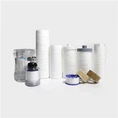
First, carefully check the overall appearance of the filter element. Check whether the filter element is damaged, cracked or loose in fiber. Any physical damage may cause a short-circuit channel during the filtration process, allowing impurities to pass directly. At the same time, pay attention to the sealing parts at both ends of the filter element to ensure that the seal is intact and there are no gaps. Poor sealing will cause liquid or gas to bypass the filter element from the side, reducing the filtration effect.
In addition, measure the size of the filter element. Use tools such as calipers to measure its outer diameter, inner diameter and length to ensure that these dimensions meet the product specifications. Because if the size of the filter element does not meet the requirements, it may affect its installation and sealing performance in the filter. And also observe whether the wound fiber line is uniform, and the fiber thickness should be consistent, otherwise it may cause differences in filtration accuracy.
2. Filtration performance detection
Filtration accuracy: Use a standard solution containing particles of known particle size for filtration test. By comparing the number and size of particles in the solution before and after filtration, the actual filtration accuracy of the filter element is determined. Particle size can be accurately measured using a professional microscope or laser particle size analyzer.
Flow-pressure characteristics: Install the filter element in a test device and measure the flow of liquid or gas through the filter element at different pressures. Under normal circumstances, as the pressure increases, the flow rate will increase accordingly. By plotting the flow-pressure curve, you can intuitively understand the performance of the filter element. If the curve is abnormal, such as the flow rate is too large or too small at a lower pressure, it may indicate that there is a problem with the porosity or structure of the filter element.
Dirt holding capacity: Allow liquid or gas containing a certain concentration of impurities to continue to pass through the filter element until the pressure difference of the filter element reaches the specified maximum value (indicating that the filter element is blocked) or the filtration efficiency decreases significantly. Measure the total amount of impurities passed in to evaluate the filter element's dirt holding capacity. Filter elements with strong dirt holding capacity can maintain good filtration effects for a long time.
3. Material quality testing
Material composition: Use equipment such as Fourier transform infrared spectrometer to analyze the material composition of the filter element to ensure that the main component is polypropylene and there are no harmful impurities. For auxiliary materials such as skeletons, it is also necessary to verify that their composition meets quality and safety standards.
Chemical stability: Soak the filter element in solutions of different pH values and observe the changes in appearance and performance after a period of time. For example, after soaking in acidic and alkaline solutions for 24-48 hours, check whether there is discoloration, deformation, fiber shedding, etc. At the same time, test the performance of the filter element after contact with organic solvents commonly used in the electronics industry to ensure its chemical stability.
If you are interested in learning more about the quality inspection methods of PP string wound filter elements, please visit www.angefilter.com!