


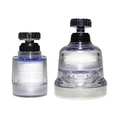
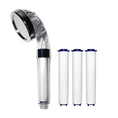
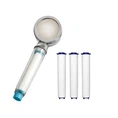
The filtration accuracy of PP melt-blown filter element is determined mainly through the following ways:
1. Production process parameters
During the manufacturing process, the filtration accuracy of PP melt-blown filter element is closely related to the melt-blown process parameters. The fiber diameter is directly related to the filtration accuracy. Finer fibers can form smaller pores, thereby improving the filtration accuracy.
In addition, the design of the nozzle and the air pressure are also critical. The size and distribution of the nozzle's spinneret holes determine the initial state of the fiber, while the air pressure affects the degree of fiber stretching. High-pressure air can make the fibers finer and more tightly arranged, so that a finer microporous structure is formed inside the filter element, which helps to intercept smaller particles and thus improve the filtration capacity of the filter element.
2. Detection method
Challenge test: Use a particle suspension of known particle size and concentration to pass through the PP melt-blown filter element. Afterwards, the number and particle size distribution of particles upstream and downstream of the filter element are analyzed. For example, for a filter element that claims to have a filtration accuracy of 0.5 microns, if it can effectively block a large number of particles with a particle size of 0.5 microns and above, and significantly reduce the number of particles downstream, it can be preliminarily judged that its filtration accuracy meets the requirements. Through multiple tests and challenges with particles of different particle sizes, the filtration efficiency and accuracy of particles of different particle sizes can be more accurately determined.
Bubble point test method: After the filter element is fully moistened, the gas pressure is slowly increased. When the gas pressure reaches a certain value, the gas blows out from the largest hole of the filter element to form continuous bubbles. The pressure at this time is called the bubble point pressure. According to the specific relationship formula between the bubble point pressure and the pore size, the maximum pore size of the filter element can be calculated, thereby inferring its filtration accuracy. This method is of great significance for evaluating the overall pore size and accuracy of the filter element.
3. Industry standards and application requirements
Different industries have corresponding standard specifications for the filtration accuracy of PP melt-blown filter elements. In the pharmaceutical industry, in order to ensure the quality of drugs, the filtration accuracy of the filter element is extremely high, and it must comply with strict pharmaceutical production quality management specifications. In the water treatment industry, there are corresponding filtration accuracy standards according to the purpose of the treated water, such as drinking water, industrial water, etc. At the same time, the customer's specific application requirements will also determine the filtration accuracy of the PP melt-blown filter element. For example, ultrapure water filtration in electronic chip manufacturing requires the filtration accuracy of tiny particles to reach the submicron level.
If you are interested in learning about the filtration accuracy of PP melt-blown filter elements, etc., welcome to visit www.angefilter.com! We have industry-leading technical dynamics and professional customer service, and look forward to working with you to create a better chapter!
https://www.angefilter.com/